


Skin pigmentation is everywhere. Whether it’s acne scars, sunspots, melasma, or just general unevenness, almost everyone deals with some form of it. Happily, you can actually fade those stubborn marks and restore your skin’s glow by sticking to a solid routine. Here’s a straightforward guide — no fluff, just real advice — on what works best for pigmentation and how to make your skin look clear and bright.
So, what causes pigmentation in the first place? It’s all about melanin. When your skin ramps up melanin production, you end up with dark patches or an uneven tone. Stuff like sun exposure, acne scars, hormones, aging, inflammation, and even irritation can trigger this.
Let’s get down to the routine that matters.
Morning Routine for Pigmentation
Start with a gentle cleanser. You want something sulfate-free and hydrating, not harsh or drying. Healthy skin absorbs treatments better, so don’t skip this step.
Follow up with vitamin C serum. If you’re hunting for brighter skin, vitamin C really delivers. It fades dark spots, shields against environmental nasties, and boosts collagen. Look for L-ascorbic acid, ferulic acid, or sodium ascorbyl phosphate. Two or three drops, right after cleansing, is all you need.
Next, slap on some niacinamide serum. This ingredient not only tones down melanin production, but it also strengthens your skin barrier, calms redness, and helps smooth texture. Go for 5–10% niacinamide — it’s gentle enough for daily use.
Don’t forget moisturizer. Pick one with hyaluronic acid, ceramides, glycerin, or squalane. If your skin is acne-prone, stick to lighter formulas.
And now, sunscreen — the big one. If you only do one thing for pigmentation, make it this. Sunscreen with SPF 50+, broad-spectrum coverage, and a PA+++ rating stops those spots from getting deeper. Go for something lightweight and non-greasy. Reapply every couple of hours if you’re outdoors.
Night Routine for Pigmentation
Night is prime time for treating pigmentation. Start with double cleansing. Sweep away sunscreen, makeup, and dirt by using an oil-based cleanser or micellar water first, then follow up with a gentle water-based cleanser.
Exfoliate two or three times a week. Chemical exfoliants like glycolic acid, lactic acid, or mandelic acid work wonders for removing dead skin and speeding up renewal, but don’t overdo it — you don’t want your skin to get angry.
Retinol is your next best friend. It boosts cell turnover, fades acne scars, helps with fine lines, and brightens uneven tone. Beginners should start slow: two nights a week, tiny amounts, and always use moisturizer afterward. And remember, stick to sunscreen the morning after.
Then, target those stubborn spots with specialized treatments. Look for alpha arbutin (reduces melanin), tranexamic acid (great for melasma), azelaic acid (helps with acne marks and redness), or kojic acid (brightens overall tone).
Finish the night with a repairing moisturizer. Ingredients like ceramides, peptides, panthenol, and shea butter give your skin a fighting chance to recover.
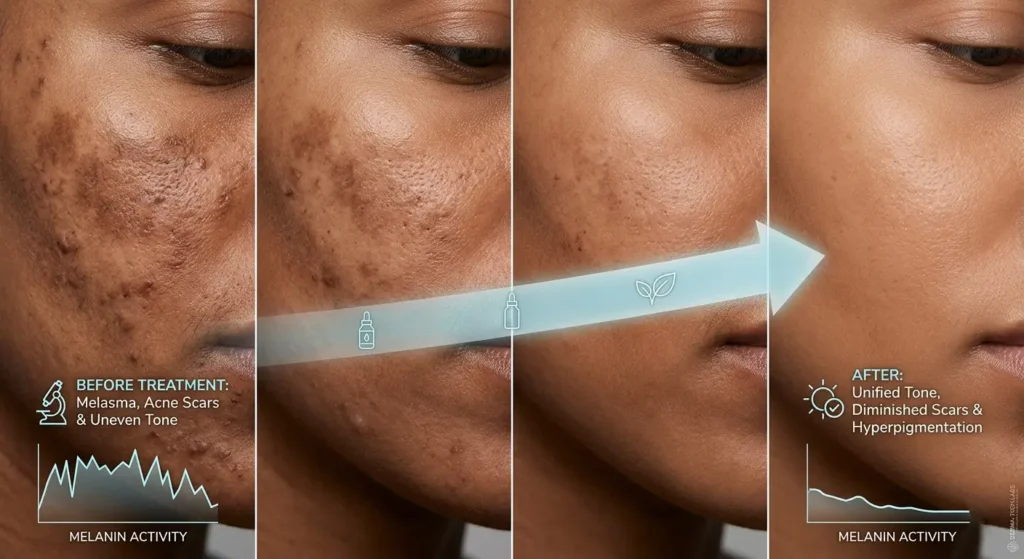
Best Ingredients for Hyperpigmentation
Here’s a quick cheat sheet:
- Vitamin C: brightens and reduces spots
- Niacinamide: evens tone, strengthens barrier
- Retinol: boosts renewal, fades pigmentation
- Alpha Arbutin: cuts down melanin
- Tranexamic Acid: targets melasma, stubborn spots
- Azelaic Acid: treats acne marks, reduces redness
- Glycolic Acid: exfoliates, boosts radiance
How to Prevent Pigmentation (Because Prevention Is Easier Than Treatment):
- Wear sunscreen. Every single day.
- Don’t pick at acne.
- Drink plenty of water.
- Stick to a consistent routine.
- Avoid harsh scrubs.
- Use antioxidant-rich products.
How Long Will It Take?
It depends on how deep the pigmentation runs — and how committed you are. Mild spots? You might see changes in four to six weeks. Moderate pigmentation usually takes two or three months. Deep melasma? Plan for six months or longer. Consistency and sun protection make all the difference.
FAQ
1- What’s the best ingredient for pigmentation?
Vitamin C, niacinamide, retinol, and alpha arbutin — these are your all-stars.
2- Can I get rid of pigmentation completely?
Mild spots often fade a lot with steady care. More stubborn melasma may need dermatologist-level treatments.
3- Is sunscreen really necessary?
Absolutely. UV rays darken spots and make them harder to treat.
4- Which acid helps most with pigmentation?
Glycolic and mandelic acid both work well for uneven tone and dark spots.
Final Thought
If you want brighter, smoother, and more even-toned skin, you’ve got to stick to a routine built on proven ingredients — vitamin C, niacinamide, retinol, alpha arbutin — and protect yourself from the sun. Good skin takes time, but you’ll see a real difference if you keep at it.


