
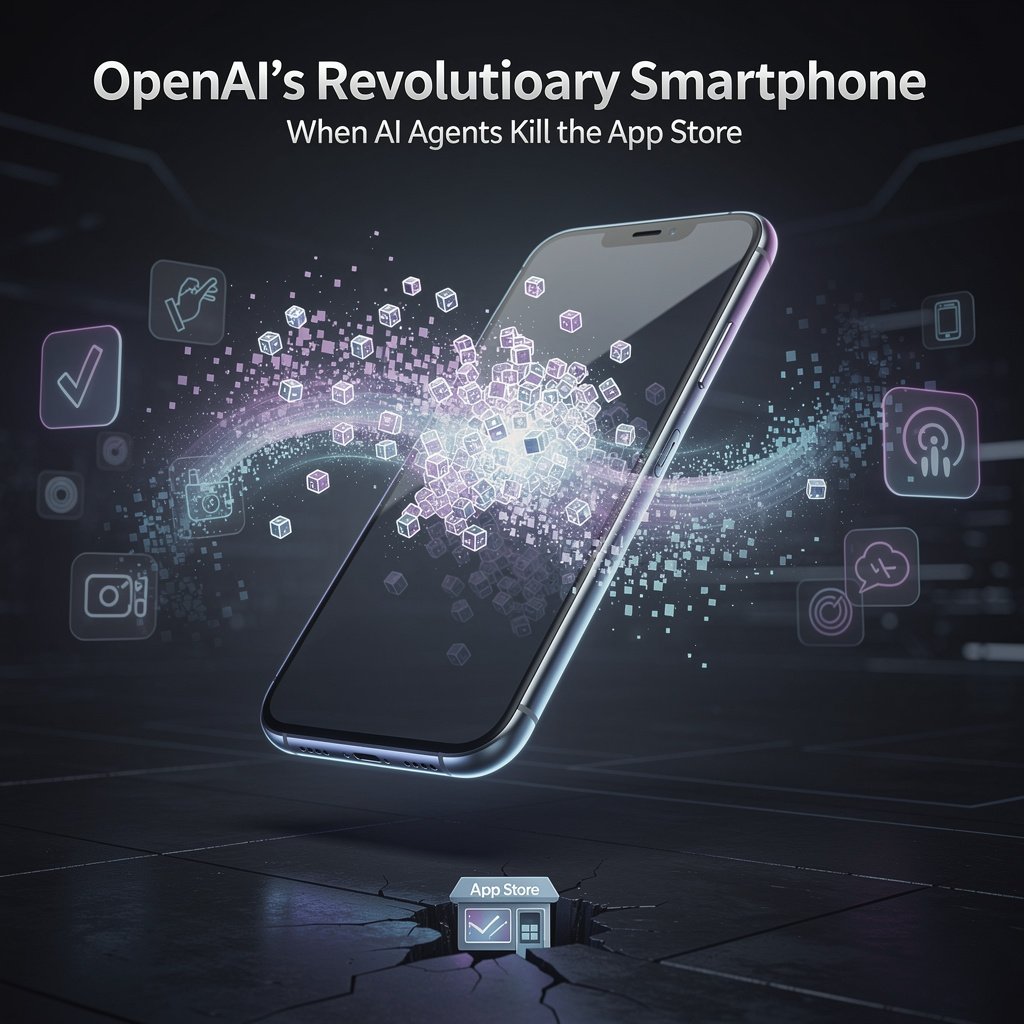

OpenAI’s Revolutionary Smartphone: When AI Agents Kill the App Store
Imagine unlocking your phone and instead of being greeted by a grid of colorful app icons, you’re met with an intelligent agent that simply asks: “What do you need today?” No app hunting. No switching between platforms. No learning new interfaces every time you want to accomplish something.
This isn’t science fiction—it’s reportedly the vision behind OpenAI’s rumored entry into the smartphone market. According to recent industry whispers, the artificial intelligence powerhouse is exploring a device where AI agents don’t just assist you—they replace apps entirely.
If true, this could represent the most significant reimagining of how we interact with our phones since the iPhone launched in 2007.
The End of Apps as We Know Them?
For over fifteen years, the app has been the fundamental unit of smartphone functionality. Need to book a restaurant? There’s an app. Want to edit photos? Download an app. Banking, fitness tracking, social media—everything compartmentalized into separate, siloed experiences.
But this model is showing its age. The average smartphone user has 80 apps installed but uses only nine regularly. We’ve become digital hoarders, maintaining apps “just in case” while our actual needs remain remarkably consistent.
OpenAI’s reported approach flips this paradigm on its head. Instead of apps, imagine AI agents that understand context, learn your preferences, and execute tasks across what would traditionally require multiple applications—all through natural language.
What Makes This Different From Existing AI Assistants?
Skeptics might argue we already have AI assistants: Siri, Google Assistant, Alexa. What makes OpenAI’s vision fundamentally different?
The current generation of voice assistants are glorified command-line interfaces. They execute pre-programmed functions when you use specific phrases. Ask Siri to do something slightly outside her programming, and you’ll get a web search result instead of actual assistance.
According to industry analysts, OpenAI’s approach leverages their advanced GPT models to create truly agentic AI—systems that can break down complex requests, make decisions autonomously, and execute multi-step tasks without constant human intervention.
Here’s the practical difference:
| Traditional Assistant | AI Agent (OpenAI’s Vision) |
|---|---|
| “Set an alarm for 7 AM” → Executes single command | “I have an early flight tomorrow” → Checks calendar, sets appropriate alarm, suggests travel time, orders car service |
| Requires specific phrasing | Understands natural conversation and context |
| Executes one app at a time | Orchestrates multiple services seamlessly |
| No memory of previous interactions | Builds understanding over time |
This isn’t incremental improvement—it’s a categorical shift from tools that do what you tell them to agents that understand what you need.
The Technology Foundation: Why Now?
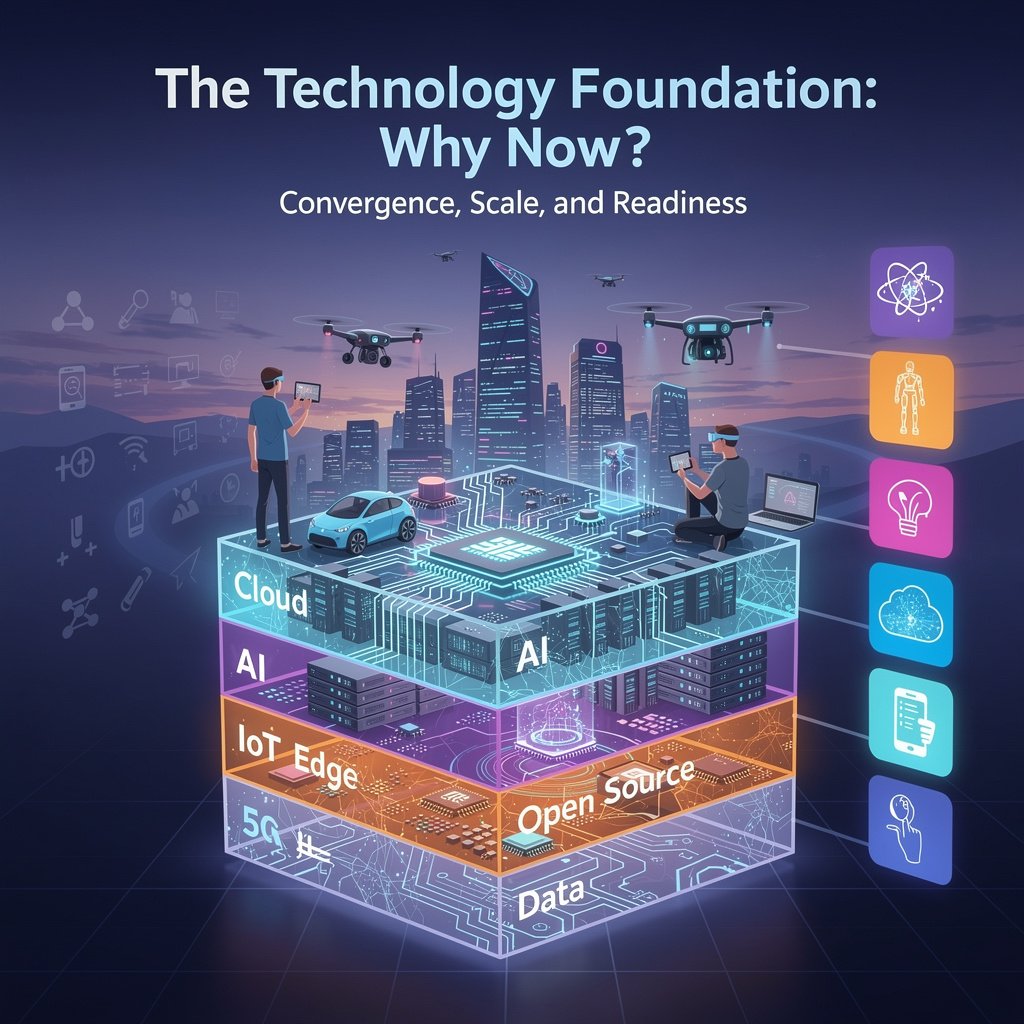
OpenAI didn’t randomly decide to build a phone. Several technological convergences make this the right moment for such an ambitious pivot.
The Rise of Large Action Models
Beyond language understanding, AI research has recently pivoted toward large action models—AI systems that don’t just generate text but can actually perform actions in digital environments. OpenAI’s work on tools like custom GPTs and the Assistants API demonstrates their focus on AI that accomplishes tasks, not just conversations.
These systems can potentially navigate websites, fill out forms, compare prices, schedule appointments, and manage complex workflows—essentially performing the functions of dozens of specialized apps through a single intelligent interface.
The API Economy is Ready
Modern internet services are increasingly built on APIs—standardized ways for different software to communicate. This means an AI agent doesn’t need to recreate entire applications. It simply needs to intelligently orchestrate existing services.
When you ask for restaurant recommendations, the agent could query Google Maps, check your dietary preferences from past conversations, cross-reference your calendar to see when you’re free, and book a reservation through OpenTable—all without you opening a single app.
Hardware Finally Caught Up
Today’s smartphone processors, particularly with Apple’s neural engine and Qualcomm’s AI-focused chips, can run sophisticated machine learning models locally. This addresses privacy concerns and latency issues that plagued earlier attempts at truly intelligent assistants.
The User Experience Revolution
Let me share a personal frustration that highlights why this matters: Last month, I needed to plan a weekend trip. The process involved:
- Checking dates with family (Messages)
- Finding flights (Google Flights, airline apps)
- Comparing hotel options (Booking.com, Hotels.com, Airbnb)
- Researching restaurants (Google Maps, Yelp)
- Creating an itinerary (Notes app)
- Sharing plans (Messages, Email)
- Adding everything to calendar (Calendar app)
I switched between at least nine applications for what should be a single coherent task: planning a trip.
An AI agent approach would handle this as a conversation:
Me: “Help me plan a weekend getaway with my family in October.”
Agent: “I see you’re free October 14-16. Based on your past trips, you prefer beach destinations within three hours of home. I found flights to Santa Barbara for $180 per person and three hotel options matching your budget and preference for family-friendly places with pools. Would you like to see them?”
This continues conversationally until the entire trip is booked, calendared, and shared with family—no app switching, no copying information between platforms, no mental overhead of managing the process.
The Industry Implications Are Staggering

If OpenAI successfully executes this vision, the ripple effects extend far beyond just another smartphone option.
App Developers Face Existential Questions
The multi-billion dollar app economy could face fundamental disruption. If users interact primarily with AI agents that access services through APIs, the traditional app—with its custom interface, push notifications, and attention-grabbing tactics—becomes unnecessary middleman.
This doesn’t necessarily mean app developers lose entirely. Instead, they’d pivot from creating standalone experiences to providing robust APIs that AI agents can leverage. The best services would still win—they’d just be accessed differently.
Apple and Google Should Be Worried
The smartphone duopoly has remained remarkably stable because iOS and Android own the app distribution infrastructure. Their app stores generate billions in revenue and give them enormous power over the mobile ecosystem.
An agent-first phone threatens this control. If users don’t download apps, the App Store becomes irrelevant. This explains why both Google and Apple are frantically integrating AI into their existing platforms—they see the same future OpenAI is reportedly building toward.
Privacy Takes Center Stage
For AI agents to work effectively, they need deep access to your data, preferences, and behavior patterns. This creates tension with growing privacy consciousness.
OpenAI would need to address fundamental questions:
- Where does the AI processing happen—cloud or device?
- How is personal data stored and protected?
- Can users audit what their agent knows about them?
- What happens when the agent makes decisions they disagree with?
Their approach to these questions could determine success or failure more than the technology itself.
The Challenges Nobody Talks About
Despite the transformative potential, significant obstacles stand between concept and reality.
The Reliability Problem
Apps crash occasionally, but you can restart them. If your AI agent makes a mistake while booking your entire vacation, the consequences are substantially worse. Current AI models still hallucinate, misunderstand context, and make errors.
Until reliability reaches near-perfect levels, users will hesitate to delegate important tasks. This is the same reason self-driving cars remain mostly promise rather than reality—the last few percentage points of reliability are exponentially harder than the first 90%.
The “I Just Want to Browse” Problem
Not every phone interaction is task-oriented. Sometimes I mindlessly scroll Instagram. Sometimes I play a game. Sometimes I just want to see what’s new without articulating a specific goal.
An agent-first interface optimized for accomplishing tasks might actually feel less intuitive for these exploratory behaviors. OpenAI would need to solve for serendipity and aimless discovery—modes that don’t fit neatly into the task-completion paradigm.
Breaking Established Habits is Hard
Even superior technology fails when it requires users to abandon deeply ingrained behaviors. We’ve spent fifteen years training ourselves to think in apps. “What do you need?” feels foreign compared to tapping familiar icons.
Behavioral inertia is why QWERTY keyboards persist despite more efficient layouts existing. OpenAI would face the enormous challenge of not just building better technology, but convincing millions to fundamentally rethink their relationship with their phones.
What This Means for You
Whether or not OpenAI’s rumored smartphone materializes exactly as described, the shift toward AI agents is inevitable. The app-centric paradigm is already cracking:
- ChatGPT plugins demonstrate integrated service access
- Browser extensions are adding AI agents that act on your behalf
- Workflow automation tools like Zapier are incorporating natural language interfaces
The question isn’t if this future arrives, but when and who builds it.
For consumers, this promises liberation from app management overhead and more intuitive interaction with technology. For businesses, it requires rethinking how they deliver value—shifting from sticky apps that hoard attention to excellent services that agents want to use.
OpenAI’s reported smartphone ambitions represent more than a new device—they signal a philosophical shift in human-computer interaction. For decades, we’ve adapted ourselves to computer interfaces, learning their languages and conventions.
AI agents promise to reverse that relationship: technology that adapts to us, speaking our language and understanding our context.
Whether OpenAI executes this vision perfectly is almost beside the point. They’ve identified the inevitable next evolution of mobile computing. Just as smartphones killed the keyboard-dominated BlackBerry era, agent-first devices will eventually replace our app-cluttered home screens.
The age of apps may not end tomorrow, but OpenAI is reportedly building the future that replaces it.
What are your thoughts on AI agents replacing apps? Would you trust an AI to handle your everyday tasks, or do you prefer the control of individual applications? Share your perspective in the comments below, and subscribe to stay updated on how artificial intelligence is reshaping the technology we use every day.

